

More than 50 rivers polluted by toxic chemicals used to treat fleas on pets
Wildlife is under threat from water pollution caused by pesticides which are hazardous, widespread and persist for years.
Wildlife is under threat from water pollution caused by pesticides which are hazardous, widespread and persist for years.

We looked at inspection reports from the body which certifies “highest standard” farms with a public-facing ‘green tick’ — and found there have been breaches of its rules at dozens of fish farms.

Threats facing our mountains, forests and national parks are increasing, but the level of monitoring of our “protected sites” has almost halved in five years, Scottish Environment LINK has found.


Salmon farming companies in Scotland have been accused of exploiting “loopholes” to hide infestations of lice that cause suffering and harm wild fish.
A new report by the campaign group, WildFish, alleges that fish farms use the prospect of harvesting caged salmon to avoid reporting high lice levels. It also says that they “inappropriately” prolong harvesting to deal with disease outbreaks.
The report attacks food certification bodies such as the Royal Society for the Prevention of Cruelty to Animals (RSPCA) for “turning a blind eye” to salmon welfare abuses and environmental damage.
To coincide with the report, Wildfish is launching a campaign called “Off the table” to persuade chefs and restaurants across the UK to remove farmed salmon from their menus because of the problems it causes.
In response, the Scottish salmon industry attacked Wildfish, saying it had “little understanding of our business”. The RSPCA insisted it would “never turn a blind eye to salmon welfare”.
WildFish, which until June was known as Salmon and Trout Conservation, analysed official data on lice, disease and harvesting. Salmon companies make regular reports to the Scottish Environment Protection Agency and the Scottish Government’s Fish Health Inspectorate, which are published.
“The industry is using reporting loopholes to obscure the true picture of an environmentally harmful intensive livestock production model that suffers from huge numbers of parasitic sea lice,” the report concluded.
“The industry gives the illusion that it is in control of the complex, and often concurrent, parasites and diseases that plague the intensively farmed fish.”
As a result, according to WildFish, farmed salmon are not protected from pain, as animal welfare law requires. Wild young salmon and sea trout are also put at risk of fatal infections, it said.
WildFish named individual salmon farms which it said had failed to report lice levels for prolonged periods by claiming they were about to slaughter the fish for market. Since March 2021 salmon farms have been legally obliged to report weekly counts of sea lice to the Scottish Government.
But under the rules they can cease reporting lice levels during a “withdrawal period prior to harvest”. According to WildFish, Norwegian-owned Scottish Sea Farms failed to provide lice counts for 25 weeks at an Orkney farm and for eight weeks at a Shetland farm in 2021-22.
The campaign group also said that salmon farms extended harvesting during disease outbreaks. It pointed out that rapid harvesting can prevent suffering and curb environmental impacts.
But it accused some farms of “inappropriately” harvesting diseased salmon over many weeks, allowing high proportions to die from infections. According to WildFish, Sutherland-based Loch Duart spent five months harvesting salmon at two of its farms in 2021.
The group also criticised food certification agencies such as the RSPCA and the Aquaculture Stewardship Council for ignoring the problems. They were “routinely turning a blind eye to serious welfare abuses and potential negative environmental impacts,” its report said.
This requires an urgent response from the industry.
Ariana Burgess, Green MSP
The report was written by Dr Matt Palmer, a veterinary surgeon and Wildfish’s farmed salmon campaign manager. “The Scottish salmon farming industry is exploiting loopholes to avoid mandatory reporting of weekly lice counts,” he told The Ferret.
“By under-reporting the true sea lice burden on Scottish farms, combined with the practice of prolonged harvesting on farms suffering with disease, this industry is risking the health and welfare of both wild and farmed fish alike.”
The report painted a “shocking” picture of what was happening on Scottish salmon farms, Palmer said. “One in four fish are dying prematurely, and sea lice parasites are proliferating in huge numbers.”
WildFish’s deputy director in Scotland, Rachel Mulrenan, added: “Our findings show why our new campaign is calling on chefs and diners in Scotland and across the UK to take farmed salmon off the table.”
The Scottish Greens expressed concern about WildFish’s allegations. “The practices they outline are not good for the salmon or for consumers,” said the Green MSP for Highlands and Islands, Ariane Burgess.
“This requires an urgent response from the industry and particularly from the farms and organisations that have been named.”
The food campaign group, Feedback, accused the salmon farming industry of a “systemic, industry-wide failure” that “simply would not be tolerated on land”. It backed the call to remove farmed salmon from restaurant menus.
WildFish have again made it clear they have little understanding of our business.
Tavish Scott, Salmon Scotland
The fish farming industry body, Salmon Scotland, counter-attacked. “WildFish have again made it clear they have little understanding of our business, despite our members remaining open to engaging directly with them,” said chief executive and former Lib Dem MSP, Tavish Scott.
“Respectfully, the organisation, its membership, and wild fish would be better served by them attending to the pressures of fishing for sport and other human-induced impacts affecting critical freshwater habitats.”
Loch Duart did not comment, deferring instead to Salmon Scotland. Scottish Sea Farms did not respond to requests to comment.
RSPCA Assured, which certifies Scottish farmed salmon, insisted that improving the welfare of all farm animals was the reason it exists. “We would never turn a blind eye to salmon welfare,” said a spokesperson.
“If we receive any complaints of breaches of the RSPCA welfare standards on any RSPCA Assured farms, they will be looked into as standard practice.”
The international Aquaculture Stewardship Council, based in the Netherlands, declined to comment on the report before it was published.
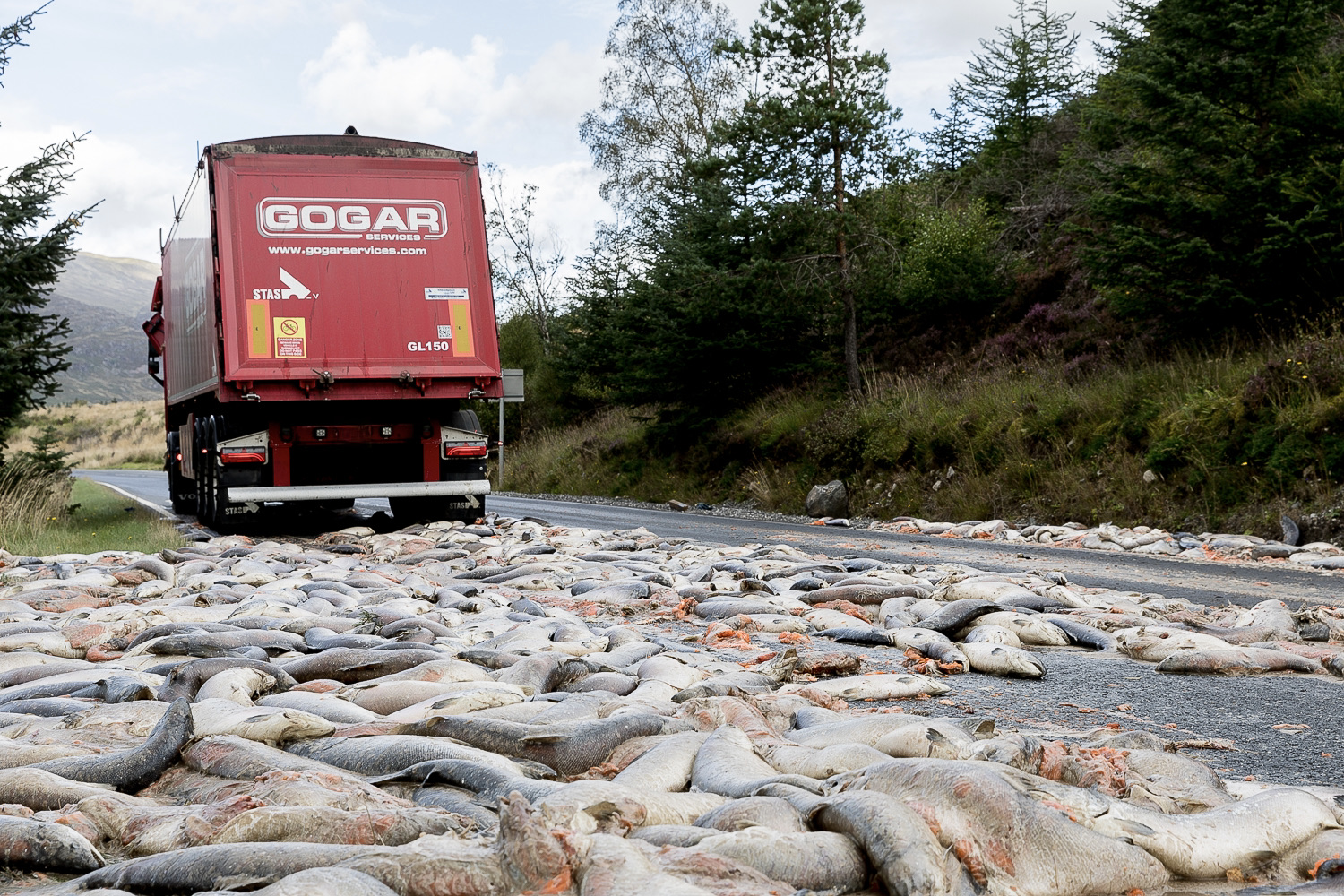
Cover image thanks to Corin Smith.

Wildlife is under threat from water pollution caused by pesticides which are hazardous, widespread and persist for years.

We looked at inspection reports from the body which certifies “highest standard” farms with a public-facing ‘green tick’ — and found there have been breaches of its rules at dozens of fish farms.

Threats facing our mountains, forests and national parks are increasing, but the level of monitoring of our “protected sites” has almost halved in five years, Scottish Environment LINK has found.

The Scottish Government has been supportive of controversial green data centres and is liaising with the industry. But critics argue there are environmental considerations and companies must not be allowed to “write the rules”.
