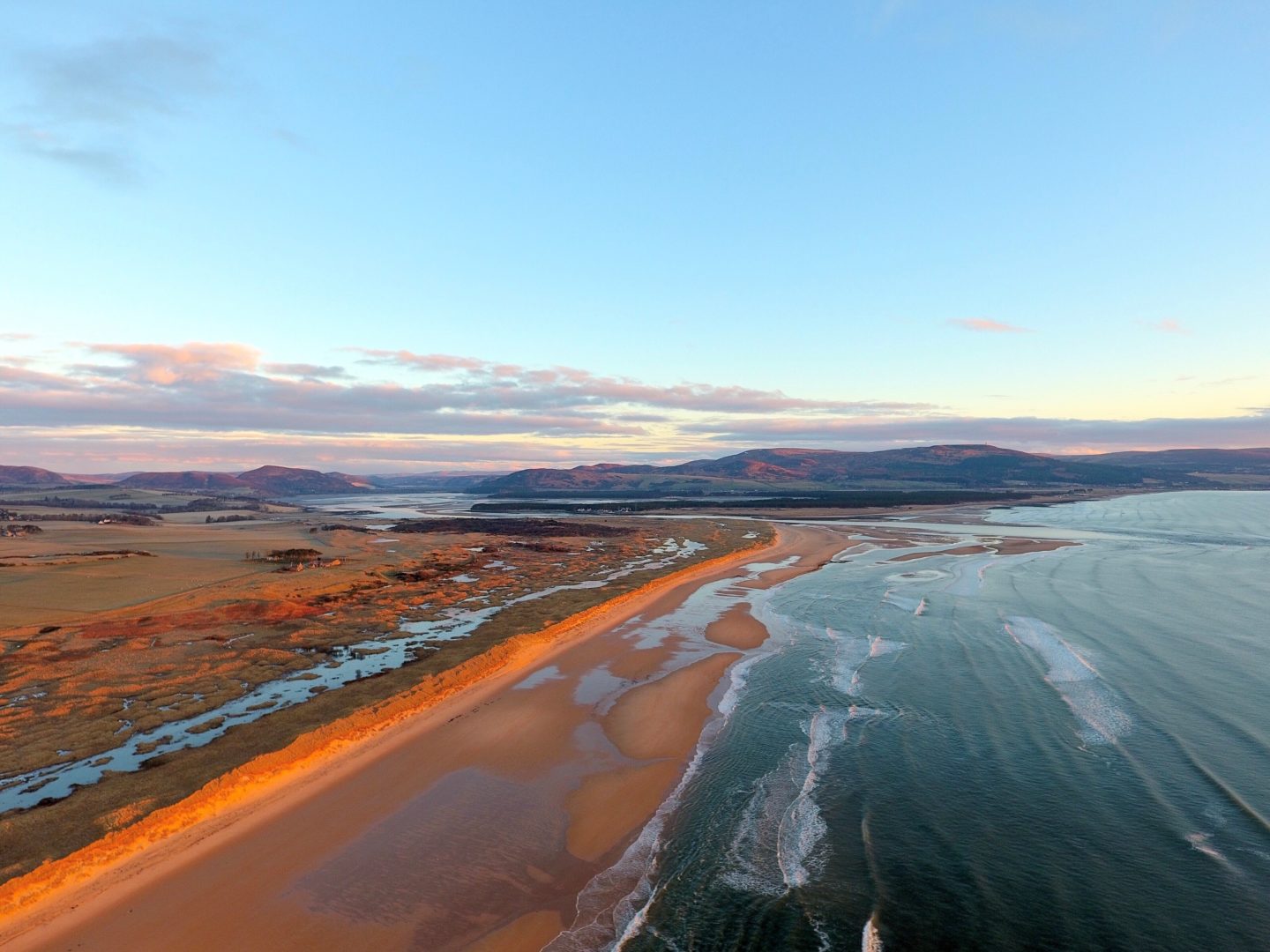
Climate change is causing rising sea levels and coastal erosion and 109 Scottish golf courses are at risk. We examined the issue as part of Green drive: Golf and the environmental crisis – a special Ferret series on golf and the environment.
The Ferret exposed the extreme views of Reform UK’s Scotland’s candidates before Nigel Farage promised to improve his party’s “poor” vetting processes, but many of them have been re-selected to fight the Holyrood election.
Anas Sarwar's party accepted over £7,000 from Stonehaven, a lobbying firm which represents the owner of Scotland's last nuclear power station. Scottish Labour has sought to make nuclear power a battleground in the May election.
First Minister Nicola Sturgeon is being urged to correct a “mistake” which makes wildlife sites in Scotland more vulnerable to damage than sites in the rest of the UK.
A coalition of 26 environmental groups has written to the First Minister warning that Scotland’s international reputation depends on her strengthening legal protection for endangered species in rivers, lochs, bogs and coastal areas.
The Ferret reported in February that new guidance issued by the Scottish Government was under fire for weakening the level of protection give to the 51 sites in Scotland designated as important wetlands under the international Ramsar Convention.
Conservationists accused the government of rewriting the rules on how Ramsar sites were treated depending on their other nature conservation designations. This meant, they said, that more damaging developments could be permitted – such as the fiercely disputed golf course planned at Coul Links in East Sutherland.
Now Scotland’s leading environmental campaigners have joined together to sign a letter calling on Sturgeon to intervene. They compliment ministers on their commitments to maintaining the environmental protection standards required by the European Union after Brexit.
But they add: “The apparent weakening of protection for our internationally important Ramsar sites through a new policy note published on 22 January gives us cause for extreme concern about actual implementation.”
The joint letter pointed out that policies across the UK had previously ensured that Ramsar sites had the same high level of protection as those designated as Natura 2000 sites. “The weakening of this policy, issued without any public consultation, would undermine a longstanding international commitment,” the letter continued.
This would contradict what ministers had told the Scottish Parliament and “mean that Ramsar sites in Scotland would receive a lower level of protection than in England, Wales or Northern Ireland,” it said.
The letter expressed the hope that the policy note may have been issued “in error” and that Sturgeon will quickly amend it. “Scotland’s international reputation depends on it,” it concluded.
The letter was co-ordinated by the umbrella group, Scottish Environment LINK. “These are uncertain times and any indication that environmental protections could be weakened is therefore of widespread concern,” said LINK’s chair, Charles Dundas.
“This is illustrated by the fact that no fewer than 26 chief executives, chairs and other senior representatives from right across Scotland’s environmental sector have come together to write to the First Minister on this issue.”
One of the signatories, the Scottish Wildlife Trust, pointed out that Ramsar wetlands hosted a “truly amazing” range of wildlife from geese and terns to rare bog plants. “Protecting them is increasingly recognised as a key step in tackling climate change and biodiversity loss,” said the trust’s chief executive, Jonny Hughes.
[aesop_quote type=”block” background=”#282828″ text=”#ffffff” align=”center” size=”1.5″ quote=”It is alarming that government policy on such an important matter can be changed on the fly, and with no consultation.” cite=”Jonny Hughes, Scottish Wildlife Trust” parallax=”off” direction=”left” revealfx=”off”]
“Unless this note has been issued by mistake it is alarming that government policy on such an important matter can be changed on the fly, and with no consultation. The First Minister has to address this issue urgently.”
Another signatory, the Royal Society for the Protection of Birds (RSPB) said it was “extremely surprised” by the new policy note. Protection for Ramsar sites would become “significantly weaker” than in the rest of the UK, said RSPB Scotland’s head of planning, Aedán Smith.
“A change in policy like this would normally require extensive public consultation before it could be implemented so it is our hope that the note must have been issued in error and will be able to be quickly withdrawn.”
The Scottish Government, however, insisted that it was meeting its Ramsar requirements. “We will consider and respond to this letter from Environment LINK members,” said a spokesperson.
“Scottish planning policy is clear that all Ramsar sites are protected through co-designation with Natura 2000 sites and/or Sites of Special Scientific Interest and are protected under the relevant statutory regimes,” the spokesperson added.
“The new guidance note issued in January restated and explained existing policy. Every Ramsar site in Scotland has at least one Natura co-designation, as appropriate to the nature of the site.”
Rob has more than 40 years’ experience specialising in reporting on environmental issues. He has co-authored three books about nuclear power, produced radio and television programmes. He likes muckraking.
Climate change is causing rising sea levels and coastal erosion and 109 Scottish golf courses are at risk. We examined the issue as part of Green drive: Golf and the environmental crisis – a special Ferret series on golf and the environment.
Huge volumes of sewage sludge have been used to fertilise Scottish farmland. Studies show it contains microplastics, forever chemicals and cancer-linked pollutants.
Scottish ministers have been privately urged to back plans for a golf course on a coastal wildlife site. This has been condemned as “backdoor lobbying that tries to bypass the rules”.