A former Scotland leader of Nigel Farage’s previous party has been under scrutiny over pro-Russian statements since an explosive court case. The Ferret analysed what David Coburn said about Russia – and Ukraine – throughout his political career.
Mohammed was 17 years old when he was shot by an Israeli sniper in Bethlehem. Two years on, his family say there is no accountability for his death. Their story is one of dozens from across the West Bank, it is claimed, with human rights organisations calling for child rights to be upheld.
Reform UK's Malcolm Offord claimed one million people came to the UK in the 20th century, and seven million people have come to the UK since 2000. This is not accurate.
The five-year closure of the Radical Road on Arthur’s Seat in Edinburgh has been condemned as “nonsensical”, “disgraceful” and “bizarre” by leading safety experts.
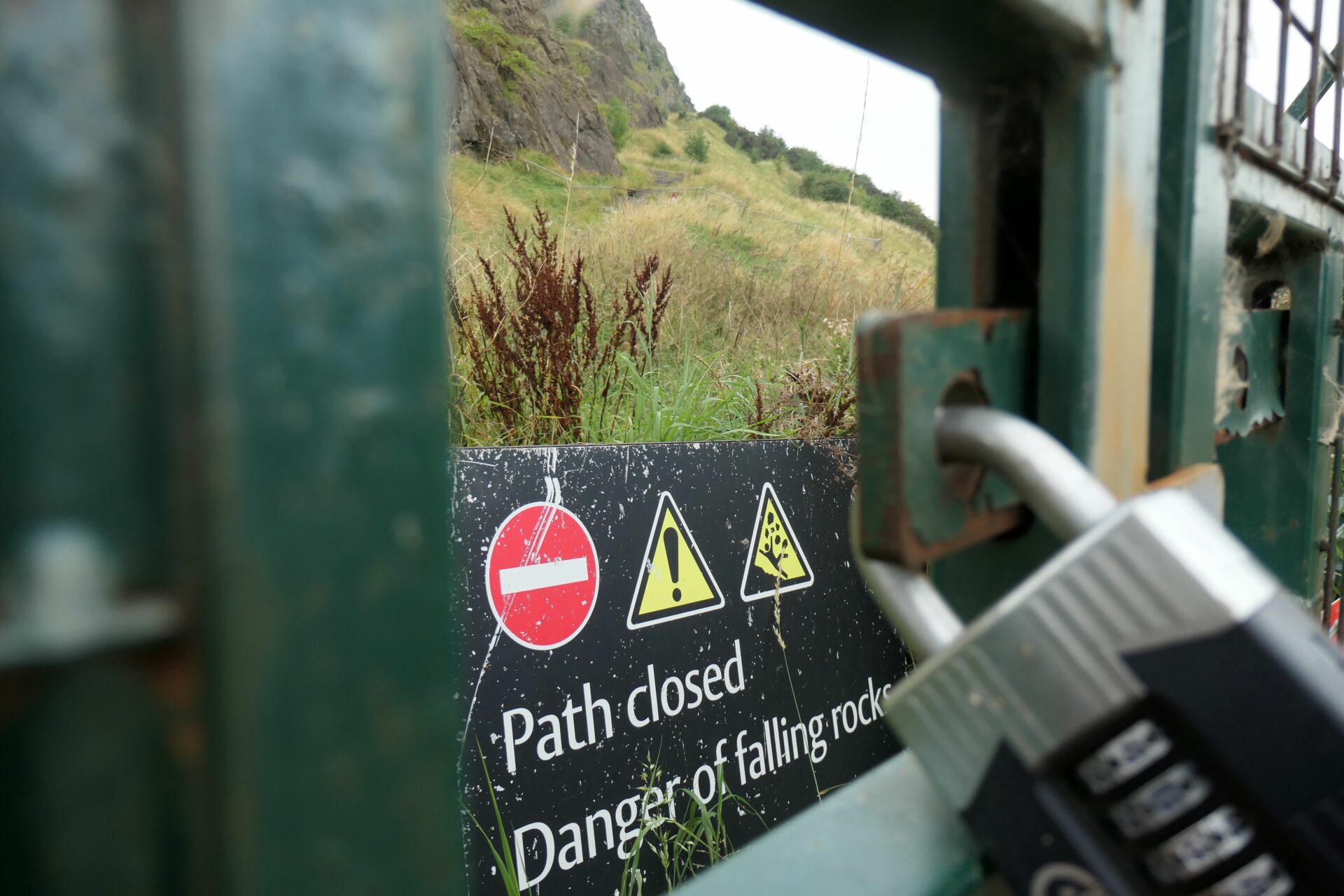
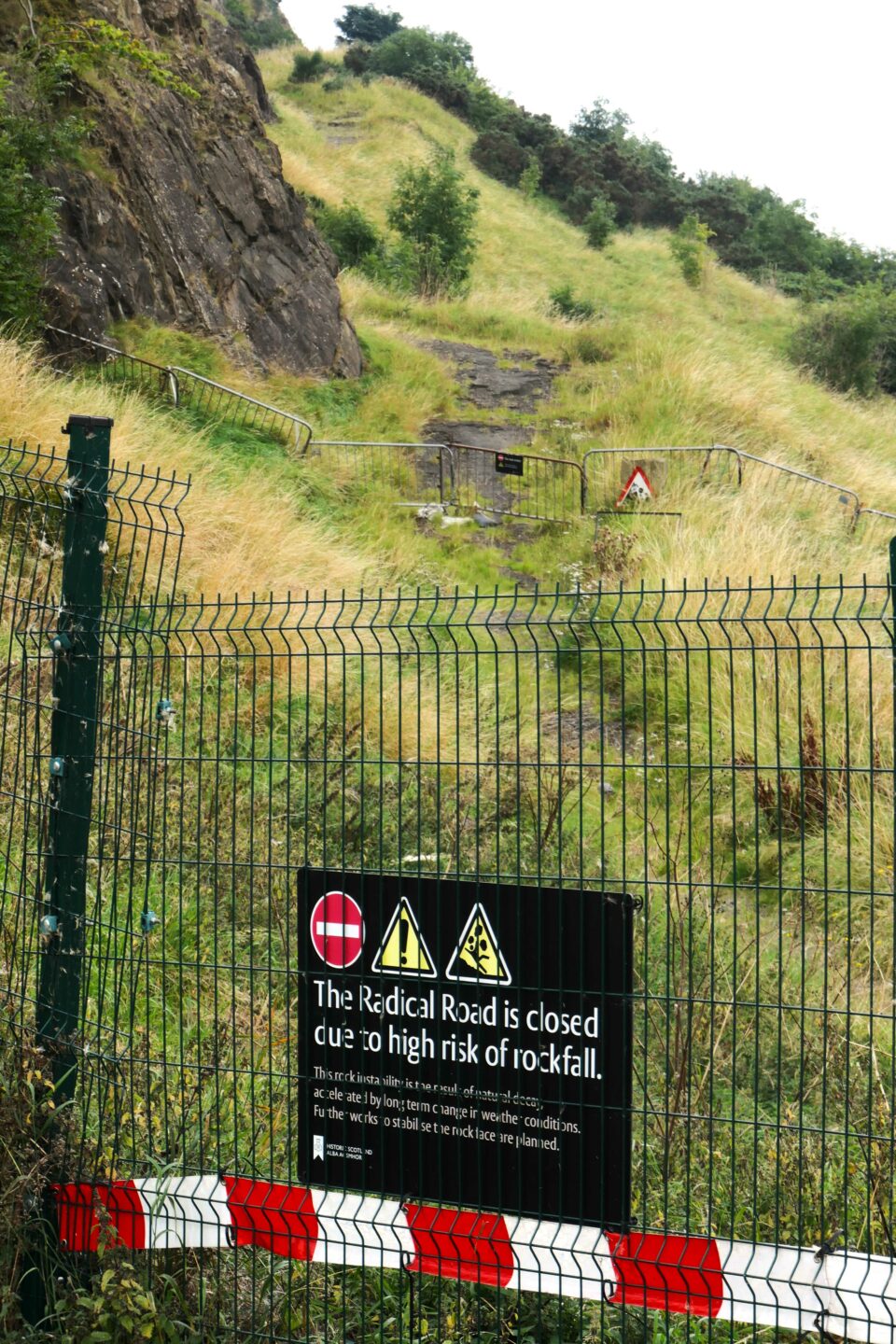
The popular and famous footpath through Holyrood Park was shut by Historic Environment Scotland (HES) after a rock fall in September 2018. Public access has since been barred by wire mesh fences lining the hillside.
But now the Scottish Government agency has run into a barrage of criticism from international risk, health and safety professionals. They have told The Ferret that the hazards from rock falls should be managed, and the road reopened.
HES, however, defended the closure as “appropriate”, saying it was because of “legal duties” that were “not optional”. It argued that it could not expose the public to risks that “cannot be appropriately managed or mitigated”.
Access to the Radical Road is barred by locked gates and wire mesh fences (photo thanks to Ramblers Scotland)
The Radical Road runs for three-quarters of a mile from near the Scottish Parliament, under Salisbury Crags towards the top of Arthur’s Seat. Giving panoramic views over Edinburgh, it used to be one of the main attractions in Holyrood Park, which is visited by more than two million people every year.
The footpath was famously built by unemployed weavers from the west of Scotland two years after their general strike led to the Radical War in 1820. The project was suggested by Sir Walter Scott to try and avoid further political unrest.
The Ferret revealed in 2022 that an internal HES study favoured making the closure permanent as the cheapest and safest course of action. We reported in August 2023 that HES had delayed plans to reopen the road for “further reviews”.
Following a public meeting on 3 December, a coalition of campaign groups launched a petition calling on HES to urgently reopen the Radical Road. So far, the petition has been signed by over 2,700 people.
He has been writing to HES since April offering to help work out how to manage the risks on the Radical Road. But he told The Ferret that he had been “systematically ignored”.
Sharman described the closure as “nonsensical” and “disgraceful”, accusing HES of creating a “monumental mess”. He is angry that HES has also restricted access at 70 of its historic properties – including Kelso, Jedburgh and Melrose abbeys in the borders – because of risks from falling masonry.
He said: “HES seems reluctant to tackle the perceived risk in an appropriate manner. Instead, HES disempowers communities, denies their access to champion their local heritage, thus changing lives in a negative way.”
Sharman shared the petition to reopen the Radical Road on his LinkedIn page, urging professional health and safety colleagues to sign it. Seven agreed, describing the closure as “bizarre” and “ridiculous” and suggesting that reopening the road was a “no brainer”.
The closure made “little sense”, she told The Ferret, speaking in a personal capacity. “The approach should be one of managing the risk, not removing it entirely and five years should have been plenty to take any action required,” she said.
“We have seen this done in other areas such as under Edinburgh Castle. We should not seek to wrap the public up in cotton wool.”
A wall to trap rocks falling from the castle rock was built on Johnston Terrace in 2016. Suggestions for managing the risks on the Radical Road have included public warning signs, wire netting, and temporary closures.
The Edinburgh architect, Ben Tindall, argued that Holyrood Park needed “very different” management. “The consequences of the ill-considered and shameful closure of the Radical Road, for more than five years, within sight of Parliament, have been incalculable,” he said.
Fences have lined the hillside for more than five years (photo thanks to Ramblers Scotland)
Ramblers Scotland said the petition to reopen the Radical Road would be delivered to HES on 19 December, when a public consultation on the future management of Holyrood Park closed.
“These extraordinary interventions from international health and safety experts completely expose HES’s flawed approach to managing risk at the Radical Road,” said the campaign group’s director, Brendan Paddy.
“We now know that not only has HES’s ongoing Holyrood Park consultation ignored the Radical Road, but they’ve also ignored offers of support from renowned specialists.”
Radical Road risks to be re-assessed
Historic Environment Scotland stressed that it would like to see no access restrictions at its properties. “The actions we have taken to mitigate an identified risk are in fulfilment of legal duties in these specific scenarios and supported by specialist geotechnical and health and safety legal advice,” said HES director of cultural assets, Dr David Mitchell.
“These duties are not optional for HES and we are content that our response has been appropriate. We will not expose our staff, contractors or members of the public to risks that cannot be appropriately managed or mitigated.”
Mitchell hoped that management and technical interventions could provide a long term solution. “But any intervention will of course require statutory consents and assessment of the resource investment required against other national priorities,” he added.
“Our specialist geotechnical engineers are about to commence a re-assessment of risk and potential mitigating measures in relation to the Radical Road and other areas of the park to update an earlier options appraisal.”
According to Mitchell, there had been at least 82 rock falls of various sizes on the Radical Road between 2017 and 2020, two involving very large rocks. HES has not actively monitored incidents since 2020, but was aware of two further rock falls.
Rob has more than 40 years’ experience specialising in reporting on environmental issues. He has co-authored three books about nuclear power, produced radio and television programmes. He likes muckraking.
A former Scotland leader of Nigel Farage’s previous party has been under scrutiny over pro-Russian statements since an explosive court case. The Ferret analysed what David Coburn said about Russia – and Ukraine – throughout his political career.
Reform UK's Malcolm Offord claimed one million people came to the UK in the 20th century, and seven million people have come to the UK since 2000. This is not accurate.
Airbnb’s business practices in the West Bank have long been in the spotlight, prompting criticism from human rights campaigners. We can now reveal that the firm has lobbied the Scottish Government 52 times since 2018.
The Aquaculture Stewardship Council monitors standards at Scottish fish farms to help consumers choose “environmentally and socially responsible” farmed seafood. But it showcased a farm that had breached its rules on sea lice 11 times.