Gypsy Travellers have been persecuted for centuries. But despite a Scottish Government apology last June for the Tinker Experiment – which tried to assimilate them into settled culture – some claim their cultural rights are still being denied.
The Scottish Government has continued to back Ming Yang’s proposed investment at Ardersier despite national security concerns. It’s now being accused of a “staggering” failure of due diligence on the firm.
This summer we revealed that convicted loyalists from Belfast travelled to Glasgow for a far right protest. Further digging has unearthed a rapidly expanding anti-immigration network between Scotland and Northern Ireland.
Highland Council has launched an investigation into allegations that a primary school playground was sprayed with a toxic pesticide in breach of council policy.
Parents at Ullapool primary school say that weedkiller was used without permission in outdoor play areas in April. They suspect it was glyphosate, which has been linked to cancer and blamed for harming wildlife.
Highland Council agreed a “partial ban” on glyphosate in 2019, which included children’s play areas. The school also has a “no weedkiller” policy, and last year requested that none be sprayed on its premises.
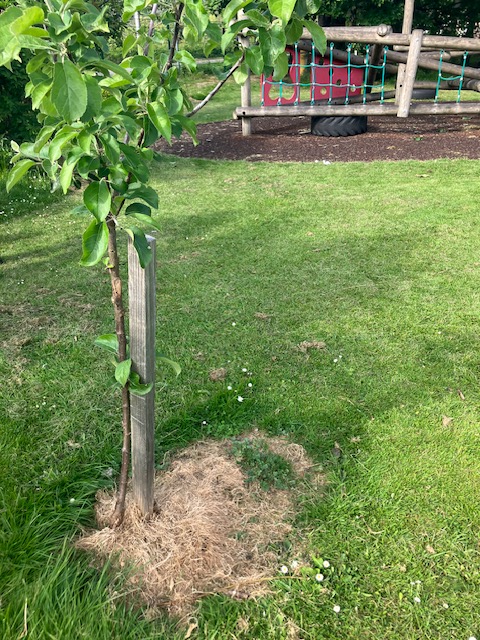
According to Ailsa McLellan, who has two sons at Ullapool primary school, someone walked into the playground without consent in the week beginning 17 April, and “liberally” sprayed weedkiller around play equipment and fruit trees, leaving patches of dead brown grass.
“I was horrified to see what looked like glyphosate use in the area that the kids play every school day given the potentially serious impacts to human health and the environment from exposure to this chemical,” she told The Ferret.
“It is hard to understand how this happened without consent or knowledge of school staff. The response from Highland Council has been terrible. They have not taken concerns seriously.”
Weedkiller in play areas at Ullapool primary school left brown patches (photo thanks to Ailsa McLellan)
Researchers have also concluded the pesticide could harm wildlife, and leave natural ecosystems more vulnerable to pollution and climate change. But some regulators and farmers have insisted the chemical is safe if used properly.
The Ferret reported in July 2022 that glyphosate was still being used by all Scotland’s 32 local authorities, despite demands for immediate bans from trade unions and environmental groups.
The Pesticide Action Network UK (PAN UK), said it was “concerning” that Ullapool school’s no-weedkiller policy seemed to have been ignored. “Pesticides should have no place in schools,” said the campaign group’s policy officer, Nick Mole.
“The risk of exposing children to their potentially harmful effects runs counter to providing a safe, healthy environment for young minds to learn and play. PAN UK urges Highland Council to get to the bottom of this and find out whether pesticide spraying was undertaken on their behalf.”
Highland Council told The Ferret it had banned the use of glyphosate at children’s play areas, along with other sports and recreation facilities. “We are aware of concerns raised over use of glyphosate in the grounds of Ullapool school,” said a council spokesperson.
“The council is investigating this matter and therefore we are unable to provide further information until this is complete.”
When asked when the investigation might be completed, the council was not able to give “any indication of timescale at this point.”
Cover image shows play area at Ullapool primary school after it was sprayed with weedkiller. Photo thanks to Janice Piggot Patterson.
Rob has more than 40 years’ experience specialising in reporting on environmental issues. He has co-authored three books about nuclear power, produced radio and television programmes. He likes muckraking.
The Scottish Government has continued to back Ming Yang’s proposed investment at Ardersier despite national security concerns. It’s now being accused of a “staggering” failure of due diligence on the firm.
We looked at inspection reports from the body which certifies “highest standard” farms with a public-facing ‘green tick’ — and found there have been breaches of its rules at dozens of fish farms.
Threats facing our mountains, forests and national parks are increasing, but the level of monitoring of our “protected sites” has almost halved in five years, Scottish Environment LINK has found.