Authorities tightened the rules around this Scottish business scheme after years of exploitation for financial crime. Moscow entities – and a man accused of facilitating child sex abuse – are still selling it to clients seeking “financial privacy”.
The Scottish Government’s green watchdog sent seven letters over three years alleging multiple breaches at a fish farm – and then issued a final warning letter.
This US-style right-wing political pressure group keeps its funders a secret. Its members have helped man Scotland’s anti-migrant and asylum demonstrations.
Campaigners have published 30 photos which they say expose the marine wildlife killed by “destructive” and “wasteful” fishing for scampi around Scotland.
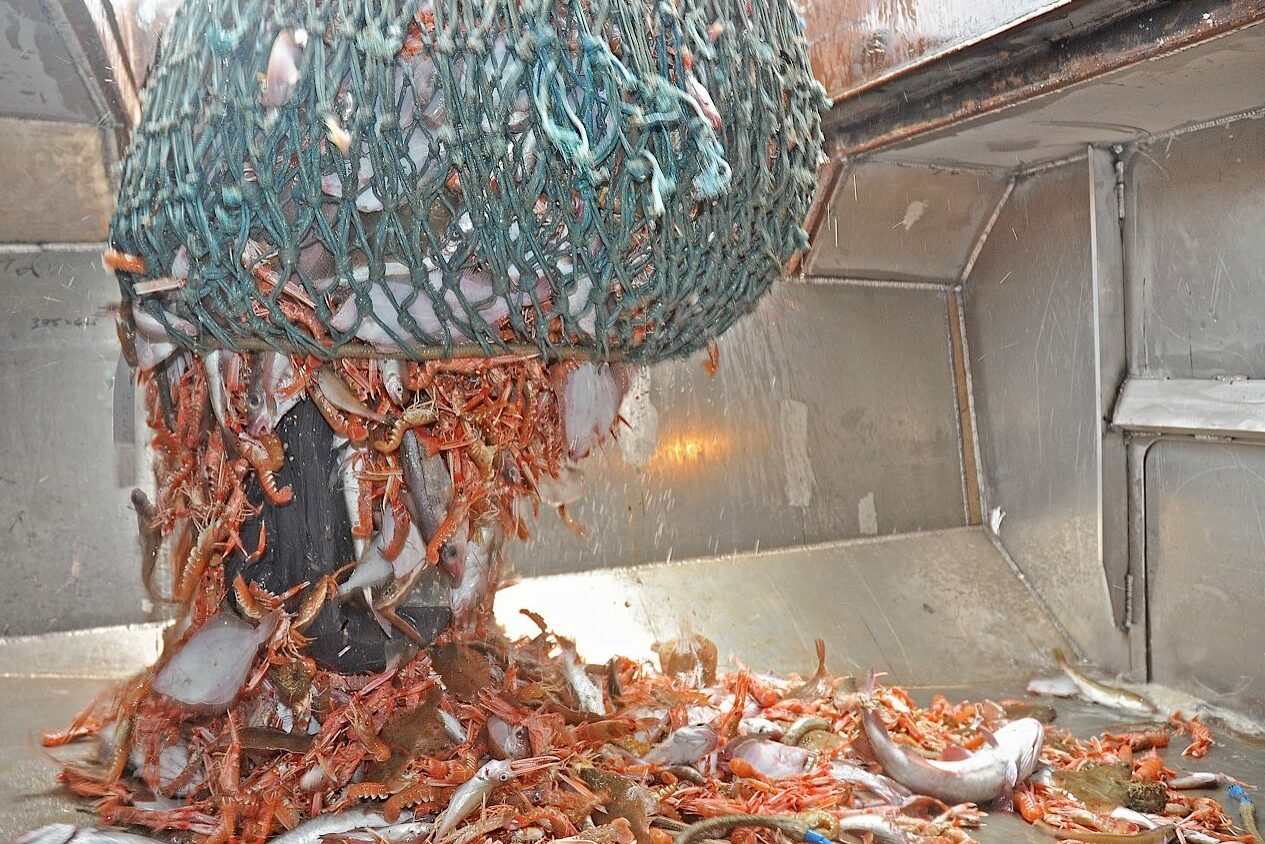
The pictures, mostly garnered from fishing industry social media accounts, show that trawling the seabed for langoustines to produce scampi also traps many other fish, including young white fish, flatfish, starfish and sharks.
The campaign group, Open Seas, says that for every kilogram of langoustine, at least another kilogram of other marine life is caught in bottom-trawl nets. It is urging supermarkets to “say no to scampi”.
The campaign has provoked an angry response from the fishing industry, which describes its claims as “incorrect” and “misleading”. One major producer accuses Open Seas of trying to destroy seabed trawling “by hook or by crook”.
Fishing for langoustines in Scotland is big business, with landings worth £91m in 2019, providing 43 per cent of the world’s supply. Most were caught by 284 seabed trawlers.
Langoustine tails are made into scampi, sometimes whole and sometimes reconstituted with minced white fish. Deep fried in breadcrumbs, they are a popular pub meal in the UK.
But there have long been concerns about the fish accidentally caught in the nets of the langoustine trawlers. The 30 photos published by Open Seas show large heaps of dead langoustines dumped on boat decks, tangled up with many other species.
Adult and juvenile herring, mackerel, whiting, pollack and plaice can be seen mixed with the bright orange lobster-like langoustines. Also visible in the photos are flatfish, crabs, starfish, sharks and other species.
One picture shows a critically endangered flapper skate, dead and allegedly dumped on the seabed around the island of Gigha in June 2023. It is surrounded by dead langoustines, their tails having been removed.
Known as “bycatch”, some of the adult commercial species caught with langoustines can be harvested by vessels with the right permits. But according to Open Seas, many dead fish are illegally discarded and thrown overboard.
“These images contradict industry claims that scampi is being sourced responsibly from a sustainable fishery and reveal the true environmental cost of this popular seafood,” said the campaign group’s Nick Underdown.
“Supermarkets and restaurants should stop selling scampi until this fishery cleans up its act and stops harming our seas. This level of bycatch represents an unsustainable level of waste and ecosystem damage.”
Many images had been obtained from the social media pages of fishing businesses over several years, Underdown said. “We are publishing them in the public interest to show what is happening out of sight at sea,” he stated.
“Scampi is currently a highly destructive product which responsible retailers should avoid until this environmental harm is stopped.”
Underdown stressed that Open Seas was not anti-fishing, but in favour of sustainable fishing. He accused some parts of the industry of misrepresenting the organisation’s position, and of trying to “deflect or play down” the problems.
Saying no to scampi ‘extreme’
The industry body, Seafish, insisted suggestions that bycatch made the langoustine fishery unsustainable were “incorrect”. Whiting, haddock and cod caught along with langoustines can be harvested and can together make up 80 per cent of catches, it said.
But Seafish accepted that “unfortunately, endangered, threatened and protected species can occasionally get caught in fishing gear”. Fishing boats were “required by law to report any capture or entanglement of any marine mammal in their equipment,” the organisation added.
“Work is ongoing to better manage this problem, with a focus on increasing monitoring to improve the understanding of the scale and impact of marine animal entanglements, and to explore options to avoid this happening.”
The campaign to say no to scampi was “an extreme view”, argued Seafish’s director of operations, Aoife Martin. “The reality is much more nuanced and reflects a fishery where government, scientists, and the fishing industry work collaboratively to improve the management of the fishery and to ensure its long-term sustainability.”
She added: “Targeting and criticising the sale of scampi by retailers, pubs and restaurants is likely to create many more problems than it will ever solve. We know that scampi comes from a mixed fishery so reducing the demand for scampi is unlikely to reduce fishing pressure.”
“We aren’t willing to dance to the tune of Open Seas on this, or any other issue, given that their aim is the destruction of the mobile gear sector by hook or by crook,” the association’s chief executive, Mike Park, told The Ferret.
Rob has more than 40 years’ experience specialising in reporting on environmental issues. He has co-authored three books about nuclear power, produced radio and television programmes. He likes muckraking.
The Scottish Government’s green watchdog sent seven letters over three years alleging multiple breaches at a fish farm – and then issued a final warning letter.
We looked at inspection reports from the body which certifies “highest standard” farms with a public-facing ‘green tick’ — and found there have been breaches of its rules at dozens of fish farms.
Threats facing our mountains, forests and national parks are increasing, but the level of monitoring of our “protected sites” has almost halved in five years, Scottish Environment LINK has found.