

Named: the salmon farms rapped over animal welfare
In the past the UK Animal and Plant Health Agency kept secret the salmon farms it censured on animal welfare grounds. Now it has changed its mind.
In the past the UK Animal and Plant Health Agency kept secret the salmon farms it censured on animal welfare grounds. Now it has changed its mind.
The Ferret visited a Scottish golf course that's won plaudits for its eco-friendly management to learn about the relationship the industry can have with nature and the environment.
We asked about the environmental records of Scotland’s 25 best golf courses. The US president’s resort in the north east was the only one to breach its licence in recent years.
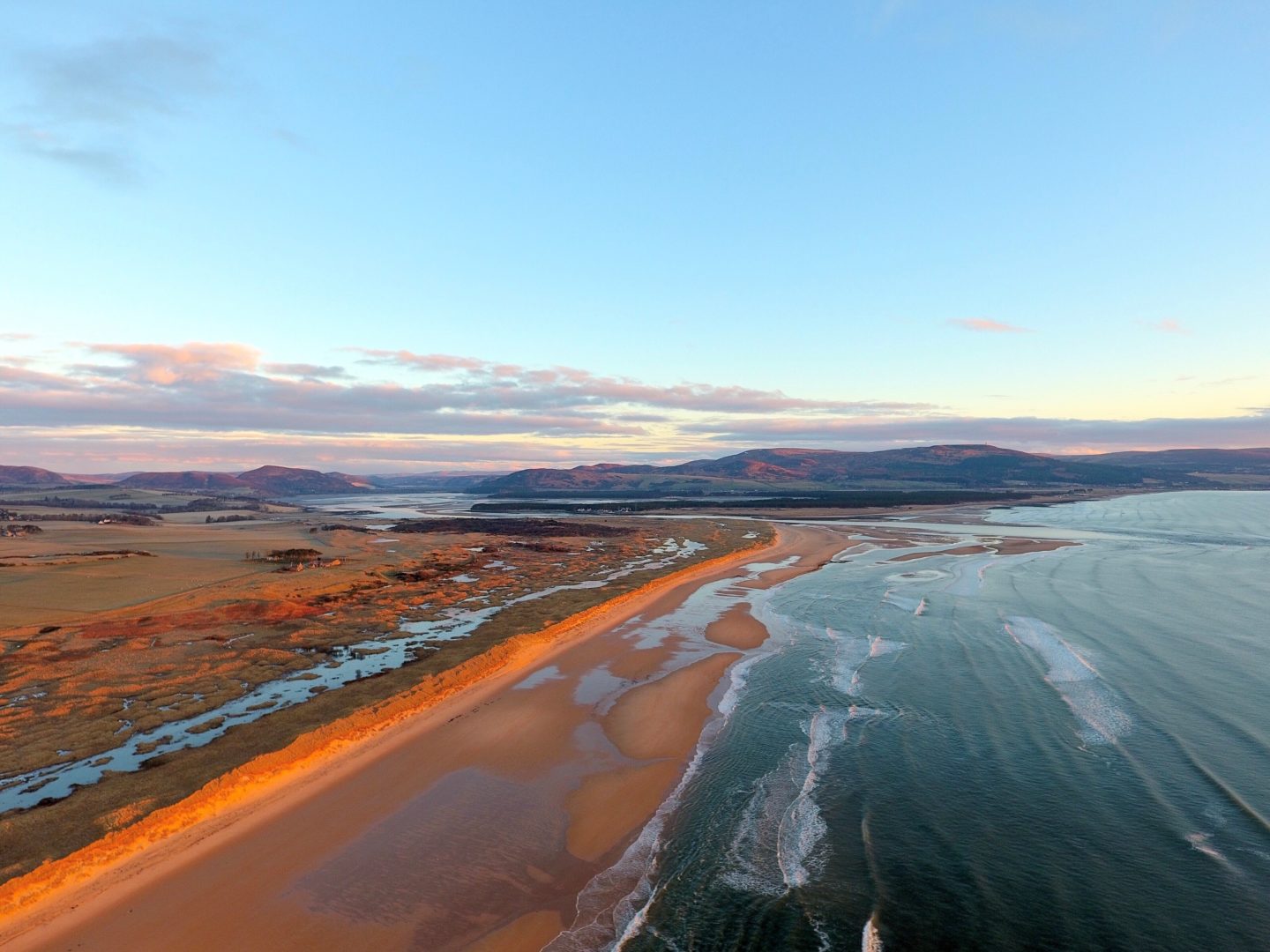
Intensely controversial plans to build a golf course on one of Scotland’s most precious coastal wildlife sites would be blocked in England, according to environmental groups.
They warn that a proposed US golf development at Coul Links in Sutherland is being used as a “stalking horse” to wreck hard-won nature protection laws and allow developers to destroy more conservation areas across Scotland.
But the US developer, Todd Warnock, accuses environmentalists of making “gross generalisations” that are “naive and irrelevant”. The golf course is an opportunity for “ecological enhancement”, he insists.
Warnock, an investor from Chicago who lives in Dornoch, has teamed up with wealthy US golf developer, Mike Keiser, to propose a £10 million championship golf course at Coul Links, near the village of Embo on the northeast coast.
But the area is protected from development under three different conservation laws because its unique sand dune network is home to rare and endangered plants, insects and birds.
The plan has been supported by some local people, but it has been opposed by seven major nature conservation groups in Scotland and the government’s wildlife agency, Scottish Natural Heritage (SNH). Highland Council officials advised against it, but councillors ignored their advice and gave the golf course the go-ahead in June.
Since then environmental groups have been urging Scottish ministers to call in the planning application for reconsideration, so far backed by over 12,000 people. At the end of July ministers extended their deadline for deciding what to do until 28 August.
The Ferret reported in February that rural economy minister Fergus Ewing’s most senior civil servant, Liz Ditchburn, had earlier intervened “in a facilitative role” on the Coul Links development. She visited the site in 2017 and convened a meeting at St Andrew’s House in Edinburgh for the developers to present their plans to officials.
Scottish Government ‘repeating mistakes over Trump’ by helping new golf plan
In July 2018 the Coul Links developer described the “symbiotic relationship” between the golf course and the environment as “trailblazing”. This was “something that can be used as a template for future developments as well,” it said in a tweet.
Conservation groups now fear that ministers may allow the golf course to go ahead and set a precedent for damaging other wildlife sites. The area is designated under the international Ramsar Convention, which they say gives weaker protection in Scotland than in England due to differing interpretations by Holyrood and Westminster.
“There are number of extremely worrying strands coming together around the case of Coul Links which suggest that the project could be being used as a stalking horse to systematically undermine and weaken Scotland’s hard won nature protection laws,” said Aedán Smith, head of planning with the Royal Society for the Protection of Birds (RSPB) in Scotland.
“Contrary to normal practice for such an application, the developer has obtained unprecedented access to the very highest levels of government. It is all the more worrying that the developer is now making unqualified claims of the project’s suitability to be used as a template for future projects on Scotland’s network of most highly protected nature sites.”
https://twitter.com/CoulLinksGolf/status/1022196552310448129
Smith warned that developers could try to exploit any weakening of European Union laws to protect the environment as a result of Brexit. “Where vested interests are circling to take advantage of the loss of European oversight for nature protection, it is vital that ministers do not allow this to happen and intervene to save this important site from needless destruction,” he said.
Members of the Scottish Wildlife Trust (SWT) have expressed “shock and disappointment” that Ramsar sites in Scotland seem to have less protection than south of the border. “It is extraordinary to think that if Coul Links was on the north east coast of England it would be safe from development,” said the trust’s chief executive, Jonny Hughes.
“We urge the Scottish Government to clarify the status of Scotland’s 51 Ramsar sites, listen to the 12,000 people who have asked them to call in the Coul Links application and halt this ruinous development on a triple protected nature site.”
[aesop_quote type=”block” background=”#282828″ text=”#ffffff” align=”center” size=”1.5″ quote=”If Coul Links was in England the golf development simply could not be permitted.” cite=”Dr Tom Dargie, Not Coul” parallax=”off” direction=”left” revealfx=”off”]
According to Dr Tom Dargie, an ecologist who chairs the local campaign group, Not Coul, the UK government position on Ramsar sites was unequivocal. “If Coul Links was in England the golf development simply could not be permitted because three basic requirements are missing,” he said.
“First, there has been no consideration of an alternative location. Second, mitigation for habitat loss is minimal. Third, there is no offer of compensation. Therefore, if approval is granted in Scotland, that means Ramsar sites here are less protected than elsewhere in the UK.”
He added: “Coul is now an important test case for Scotland upholding its obligations under this vital international environmental treaty. SNH demonstrated that the overall effect would be the loss of the environmental integrity of the site.”
Campaigners have previously compared Coul Links to Donald Trump’s golf course at Menie on the Aberdeenshire coast. They said that ministers should learn the lessons from Menie, where another protected sand dune system was damaged.
Trump 2.0: new row over golf and wildlife
Warnock, however, strongly objected to the comparison with Trump, of whom he is not a fan. He highlighted Dargie’s previous role as an ecological adviser to Trump at Menie – though Dargie’s advice on how to protect the dunes there was rejected by Trump.
“Not Coul, led by Donald Trump’s former ecologist, RSPB and SWT continue to demonstrate that they lack specific knowledge of the Coul Links site,” said Warnock.
“Their gross generalisations regarding development on designated sites are naive and irrelevant. We’ve sought the advice and counsel of experts in the area of development in designated sites.”
He added: “We have worked tirelessly with Highland Council, SNH, the Scottish Environment Protection Agency and other statutory bodies. We are confident that we meet all necessary regulatory requirements.”
[aesop_quote type=”block” background=”#282828″ text=”#ffffff” align=”center” size=”1.5″ quote=”We are confident Coul Links offers a tremendous opportunity for ecological enhancement.” cite=”Todd Warnock, developer” parallax=”off” direction=”left” revealfx=”off”]
Warnock noted that there were no objections on bird habitats, which formed much of the regulatory framework of the various wildlife designations. “The only objection to the project is from SNH regarding 13.4 hectares of affected sand dune habitat,” he said.
“We are confident Coul Links offers a tremendous opportunity for ecological enhancement, as well as profound economic opportunities for the highlands. We were pleased the Scottish Government extended its evaluation period because we are confident, like Highland Council’s planning committee, that a thorough assessment of the project will reveal it as a tremendous opportunity.”
The Scottish Government promised to consider the protected status of Coul Links. “Ministers had an initial 28 day period to consider the application for a golf course at Coul Links after Highland Council notified them it was minded to grant planning permission,” said a government spokesperson.
“In order to fully consider the application ministers extended that period by a further 28 days from 1 August to consider whether or not to call in the application for their determination. The application site includes part of a Ramsar site, and ministers will consider all designations in reaching a decision on call in.”
The extension will allow ministers “time to give full and proper consideration to whether this planning application should be decided at the national level,” the government argued.
Photo thanks to Craig Allardyce. A version of this story was published in the Sunday Herald on 12 August 2018.


The Ferret visited a Scottish golf course that's won plaudits for its eco-friendly management to learn about the relationship the industry can have with nature and the environment.

We asked about the environmental records of Scotland’s 25 best golf courses. The US president’s resort in the north east was the only one to breach its licence in recent years.

Climate change is causing rising sea levels and coastal erosion and 109 Scottish golf courses are at risk. We examined the issue as part of Green drive: Golf and the environmental crisis – a special Ferret series on golf and the environment.

Britain Remade has appointed two directors from a lobbying firm which represents EDF, the owner of Scotland’s last nuclear power station.


