The Ferret exposed the extreme views of Reform UK’s Scotland’s candidates before Nigel Farage promised to improve his party’s “poor” vetting processes, but many of them have been re-selected to fight the Holyrood election.
Anas Sarwar's party accepted over £7,000 from Stonehaven, a lobbying firm which represents the owner of Scotland's last nuclear power station. Scottish Labour has sought to make nuclear power a battleground in the May election.
Social justice secretary Shona Robison wrote a letter to EHRC chair Kishwer Falkner, accusing the human rights body of making “a significant policy change” when it scrapped its support for the reforms in January, which simplify the process for a transgender person to legally transition.
In a letter to EHRC chair Kishwer Falkner, Robison wrote the change in tack was made without “consultation activity, evidence or legal basis”. She asked the body to update the Scottish government on any other policy changes in future so “we can be aware”.
A spokesperson for the Equality and Human Rights Commission said it had received the cabinet secretary’s letter, and it will “respond to the points raised in due course”.
Previously, the EHRC has said it backed the reforms, arguing they “will better support trans people to live their lives free from discrimination”.
As a national human rights institution, the EHRC’s role is to stand up for the rights and protections of people in line with international human rights standards, instead of being swayed by political agendas or personal opinion.
Colin Macfarlane, director of Stonewall Scotland
In January, the EHRC chair wrote to the Scottish government on social media, asking it make “more detailed consideration” before reforming the Gender Recognition Act. In the letter, Falkner expressed concerns the reform could “affect data, participation and drug testing in competitive sport, and practices within the criminal justice system”.
“It would be helpful to understand whether you now consider the negative impacts on trans people of the current system… no longer exist,” Robison wrote.
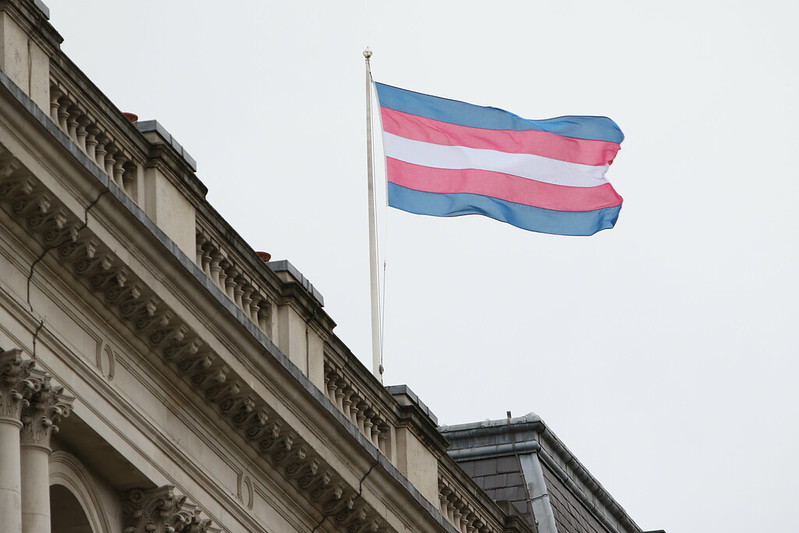
The SHRC has criticised the EHRC for intervening in policy affecting transgender people in Scotland Photo: Flickr/Foreign, Commonwealth and Development Office, UK government
The “extraordinary exchange” between the pair was published by the Scottish parliament on 28 February, which Stonewall Scotland said highlights the “widespread confusion and discordance” over the EHRC’s change on transgender rights.
In a response to the letter, Falkner wrote the EHRC would “continue to engage” with the Scottish government “if and when other relevant policy positions are being developed or reviewed”.
Robison responded: “I do not find this reassuring and I ask you to set out what policies and principles the EHRC still holds to”.
On Friday, it released a statement telling the EHRC “where it proposes to take such action, it is required to seek our consent”.
Colin Macfarlane, director of Stonewall Scotland and Northern Ireland said “this extraordinary exchange” between the Scottish government and Falkner “highlights the widespread confusion and discordance that has arisen as a result of the EHRC’s sudden change in stance on trans rights”.
He added: “As a national human rights institution, the EHRC’s role is to stand up for the rights and protections of people in line with international human rights standards, instead of being swayed by political agendas or personal opinion. The abrupt nature of the EHRC’s intervention, and the dialogue that has followed, shows just how far for this standard the EHRC has now drifted,” he added.
Correction note at 01/03/2022: This piece was edited to state Scottish parliament published the letters between Shona Robison and the EHRC, as opposed to the Scottish government.
Scotland’s prison transport operator has been condemned for performance failures. It’s co-owned by a US corporation supplying bounty hunters for Donald Trump’s mass deportation initiative.
Mohammed was 17 years old when he was shot by an Israeli sniper in Bethlehem. Two years on, his family say there is no accountability for his death. Their story is one of dozens from across the West Bank, it is claimed, with human rights organisations calling for child rights to be upheld.
The residents of Umm al-Khair in the West Bank were already reeling from the loss of community leader and English teacher Awdah Hathaleen. Now they are fighting a mass demolition order on their homes. Human rights organisations say it’s become a symbol of the struggles of life under occupation.